
Capturing Memories: Elementary School Photography Tips
Elementary school photography is about more than getting everyone to smile at the same time. The best classroom pictures and school portraits capture a season of childhood that families will want to remember, while keeping the school day calm and organized. With the right preparation, communication, and photography model, schools can create a picture experience that feels smooth for staff, comfortable for students, and genuinely valuable for parents.
What makes elementary school photos worth keeping?
Elementary school photos are worth keeping when they feel clear, natural, age-appropriate, and connected to the child’s real school experience. Parents usually want a polished portrait, but they also appreciate images that reflect personality: a shy grin, a favorite classroom corner, a group moment with classmates, or a confident expression that feels like their child rather than a rushed pose.
That balance matters because young children do not always respond well to pressure. A picture day that feels hurried or overly formal can lead to stiff expressions, anxious students, and frustrated teachers. A better approach gives children simple directions, allows enough time for transitions, and uses friendly prompts instead of forced smiles.

For schools, the goal is also practical. Great Elementary school photography should preserve memories without taking over the building. Whether portraits happen in the gym, the classroom, outdoors, or through a digital-first option, the process should respect instruction time, student privacy, and family expectations.
Start with a calm, child-friendly plan
The best photo sessions begin before the camera comes out. Elementary students need predictability, especially younger children who may feel nervous around unfamiliar adults, bright lights, or changes in routine. A simple plan helps teachers prepare students and helps photographers capture better expressions.
Schools can improve the experience by sharing picture-day details early. Parents should know the date, clothing suggestions, ordering process, retake options, and whether photos will be used for yearbooks, student IDs, classroom displays, or family packages. Teachers should know where students are going, how long it may take, and what to do if a child is absent or uncomfortable.
A strong plan usually includes:
A simple class schedule: Avoid vague time windows when possible. Teachers should know when their class is expected and how students will transition.
A backup location: Weather, assemblies, testing, or maintenance issues can change the day quickly. Have a second option ready.
Clear student flow: Decide where students line up, where they wait, where they are photographed, and how they return to class.
Comfort items for younger grades: A teacher, aide, or familiar staff member nearby can help students relax.
A retake policy: Parents and staff should know how retakes work before anyone is disappointed.
The smoother the logistics, the more energy everyone can spend on getting warm, memorable images.
Create classroom pictures that feel alive
Classroom pictures do not have to be limited to everyone sitting still in rows. Traditional group photos still have their place, but families often love images that show the classroom as a community. A well-composed class photo can feel organized and lively at the same time.
Before taking classroom pictures, tidy the scene without making it sterile. Remove visual clutter like loose papers, trash cans, and distracting cords, but keep meaningful details such as student artwork, bookshelves, learning stations, or a colorful bulletin board. These elements help the image feel rooted in the school year.
Lighting also makes a major difference. Natural window light is often softer than overhead fluorescent lighting, though it should not create harsh shadows across students’ faces. If the room is dark, a photographer may use supplemental lighting, but it should be positioned so children are not squinting or startled.
For more natural group images, try:
Having students gather around a reading rug, project table, or classroom library.
Seating children at different heights so every face is visible.
Asking the teacher to stand or sit with the class rather than appearing separate from the group.
Capturing one formal image and one more relaxed version.
Using quick prompts such as “look proud,” “show your best first-day smile,” or “give your teacher a tiny wave.”
These small choices can turn a basic group photo into a genuine memory of the classroom community.
Help students look and feel like themselves
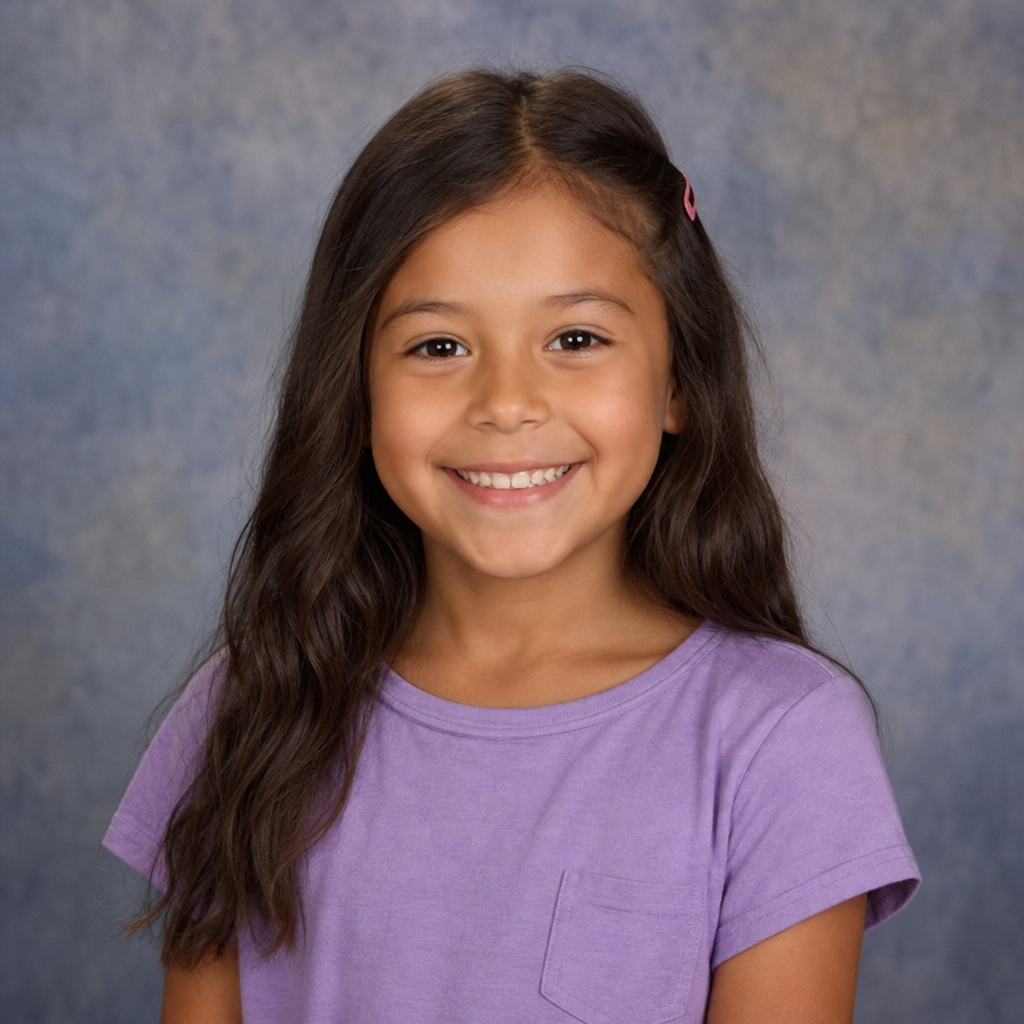
School portraits work best when students feel comfortable, not overly styled or rushed. Parents may choose the outfit, but the child brings the expression. A photographer who understands elementary ages knows that a five-year-old, an eight-year-old, and an eleven-year-old may need very different types of direction.
For younger students, simple instructions are best. Instead of asking for a perfect smile, the photographer might ask them to think of a favorite snack, say their teacher’s name in a silly voice, or take one big breath. Older elementary students may appreciate more respectful coaching, such as adjusting posture, turning slightly toward the light, or choosing between two background options.
Teachers and staff can help by avoiding last-second corrections that make students self-conscious. A quick hair fix or collar adjustment is fine, but too much fussing can make a child feel like something is wrong. The goal is neat, natural, and confident.
Good school portraits often share a few traits:
The eyes are sharp and well lit. Eye contact helps the image feel personal.
The expression feels believable. A small smile can be better than a forced grin.
The background supports the student. It should not compete with the face.
The pose is age-appropriate. Children should look like children, not miniature adults.
The process is quick but not frantic. Students need enough time to settle.
When children feel respected, portraits tend to reflect personality instead of pressure.
How do modern school photography options compare with traditional picture day?
Traditional picture day usually brings a photographer, equipment, order forms, and a class-by-class schedule into the school building. It can create consistent portraits for yearbooks and records, but it may also require gym space, staff coordination, student movement, and a longer wait before families receive images. Digital-first or virtual photography options can reduce disruption by letting families complete portraits from home, often with online ordering and faster digital delivery.
Neither model is automatically right for every school. The better choice depends on the size of the school, the needs of the yearbook team, parent preferences, technology access, budget goals, and how much administrative work the staff can reasonably absorb.
A traditional model may work well when:
The school needs every student photographed on one or two scheduled days.
The vendor has a proven system for moving classes efficiently.
Families are used to the process and participate consistently.
The school wants uniform backgrounds and tightly standardized images.
Staff can spare the space and coordination time.
A digital-first or virtual model may work well when:
The school wants to reduce interruptions to instruction.
Parents prefer to see images before ordering.
Families want more flexibility in timing.
The school wants fewer paper forms and less package handling.
Fast digital access is a priority.
Some schools may also use a hybrid approach. For example, they might schedule traditional portraits for yearbook consistency while offering optional at-home sessions or digital galleries for family purchases. The key is to choose a model that serves the school’s real workflow, not just what has always been done.
Make ordering easier for parents
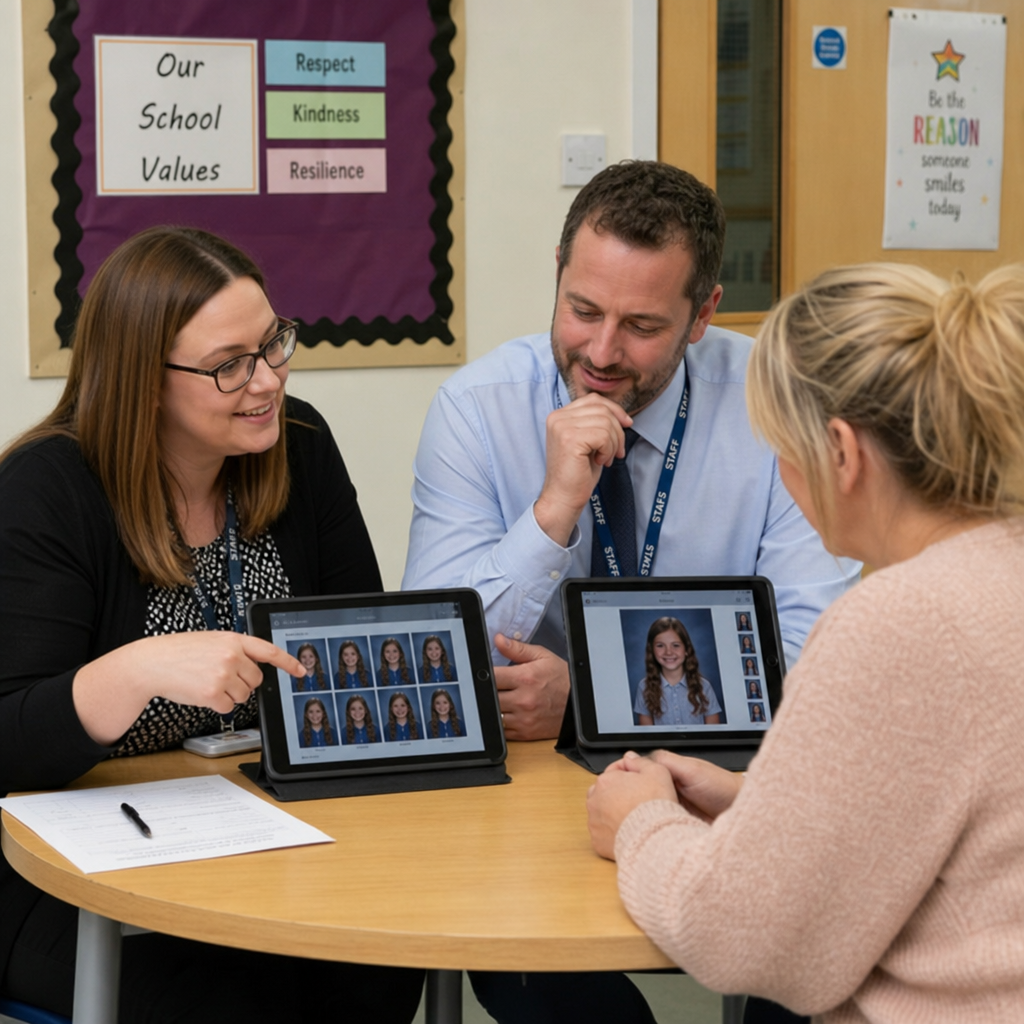
A strong photography experience can fall apart if ordering is confusing. Parents are busy, and many are less willing to purchase photo packages sight unseen. A clear, digital-friendly ordering process can increase confidence because families understand what they are buying.
Schools should look for communication that is simple and repeated across channels. A backpack flyer may help, but it should not be the only source of information. Email, school apps, text reminders, and website updates can reduce missed deadlines and questions to the front office.
Helpful ordering features include:
Online galleries: Parents can view photos before making a decision.
Simple package explanations: Avoid too many similar options that create decision fatigue.
Digital download choices: Many families want images for announcements, gifts, and online sharing.
Clear deadlines: State when galleries open, when orders are due, and when photos are expected.
Accessible customer support: Parents need to know whom to contact for order issues, not just the school secretary.
The ordering experience is part of the memory. If families feel pressured, confused, or surprised by the process, even a good photo can leave a poor impression.
Protect student privacy from the start
Student photos are sensitive, and privacy should never be treated as an afterthought. Schools should understand how images will be collected, stored, displayed, shared, and deleted. This is especially important when vendors use online galleries, digital delivery, or integrations with school systems.
Before picture day, administrators should confirm whether the vendor has appropriate privacy practices and whether the school’s own policies are being followed. Parents should receive clear information about how portraits may be used, especially if images could appear in yearbooks, student information systems, ID cards, classroom materials, or promotional content.
A practical privacy checklist includes:
Confirm who has access to student images and galleries.
Use secure gallery access rather than public links when possible.
Avoid posting identifiable student photos without proper permission.
Clarify how long the vendor keeps images.
Make opt-out procedures easy for families to understand.
Review how names, grades, teacher information, and student IDs are connected to photos.
Privacy safeguards build trust. They also help schools show families that convenience and technology are being used responsibly.
Choose a vendor that supports the whole school community
Selecting a photography vendor is not just about image quality. The right partner should make life easier for administrators, teachers, families, and students. A vendor who takes beautiful portraits but creates weeks of confusion for the office may not be the best fit.
When comparing options, schools should ask practical questions about the full experience. How much staff time is needed? Are forms paper-based or digital? Can parents preview photos? How quickly are images delivered? How are retakes handled? What happens if the photographer is sick or equipment fails? Can the vendor support yearbook exports or school data needs without creating privacy concerns?
Important vendor factors include:
Photo quality: Review examples that include real elementary-aged students, not only studio samples.
Student experience: Ask how photographers work with shy, energetic, or anxious children.
Administrative burden: Look for systems that reduce manual sorting, money collection, and repeated parent questions.
Delivery process: Families should know when and how they will receive portraits.
Ordering transparency: See-before-buy options can improve parent confidence.
Retake flexibility: The policy should be clear, fair, and easy to schedule.
Data protection: Privacy practices should match school expectations.
Reliability: Larger schools may need backup photographers, equipment, and support staff.
Local photographers can bring warmth and personal attention, which many communities value. Larger or technology-focused providers may offer more automation, faster workflows, or stronger scalability. The best choice is the one that matches the school’s priorities and communicates clearly from start to finish.
Prepare teachers without adding to their workload
Teachers are often the quiet heroes of picture day. They calm nervous students, fix collars, track absences, and keep the class moving. Still, photography should not become another major burden on an already full schedule.
Schools can support teachers by giving them concise instructions instead of long packets. A one-page guide or short staff message is usually enough. It should include the schedule, location, student order, what to bring, what not to worry about, and who to contact if something changes.
Teachers can help most by:
Reminding students about picture day in a positive, low-pressure way.
Bringing a class roster to track who was photographed.
Sending students with glasses, hair accessories, or forms if needed.
Letting the photographer handle posing and expressions.
Notifying the office about absent students who may need retakes.
The less teachers have to improvise, the more smoothly the day runs.
Small details create better memories
Elementary school photography succeeds in the details. A clean background, a relaxed student, a clear parent email, a secure gallery, and a realistic schedule may seem small on their own. Together, they shape whether picture day feels like a stressful interruption or a meaningful school tradition.
Schools do not need a perfect production to create photos families treasure. They need thoughtful planning, child-friendly direction, respectful privacy practices, and a vendor model that fits the community. When those pieces come together, classroom pictures and school portraits become more than annual tasks. They become keepsakes that show who students were, where they learned, and how they grew.